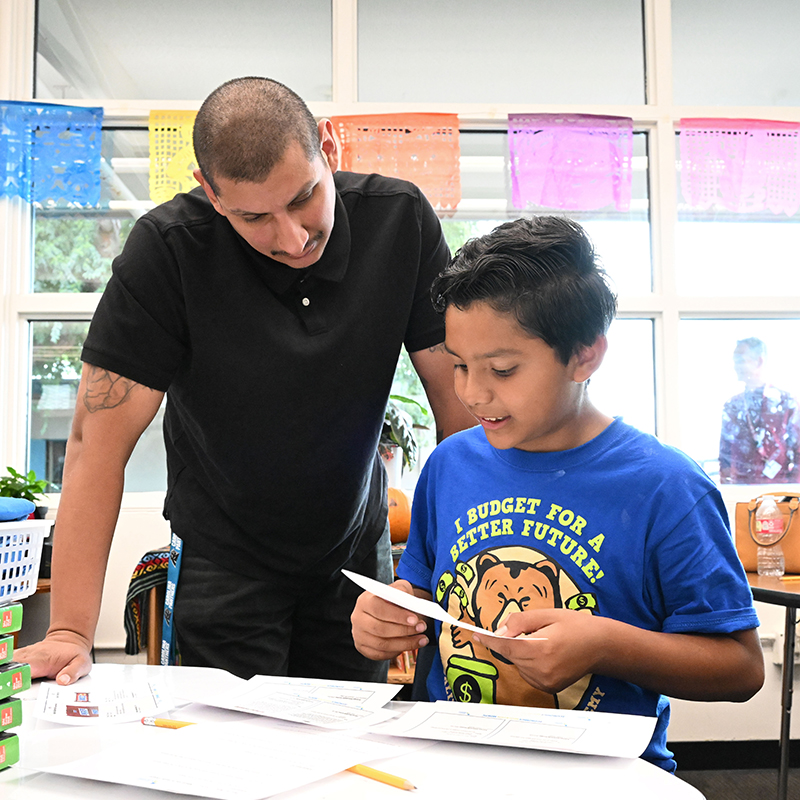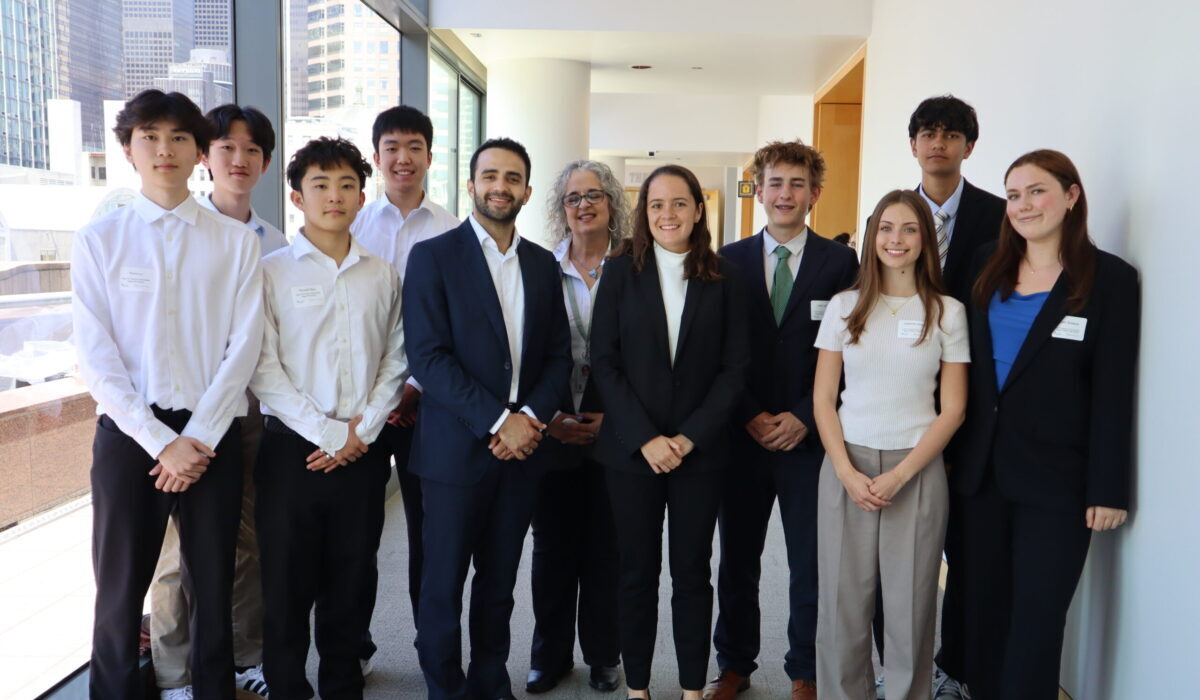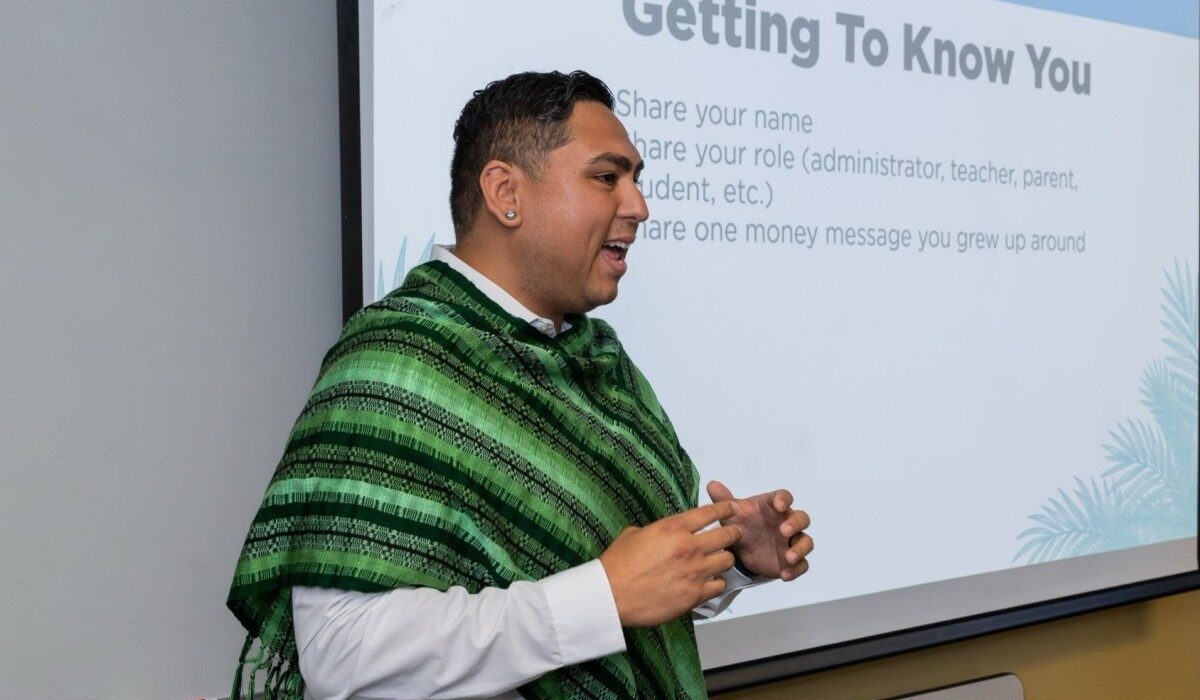
To mark his first 100 days as CEO, David is launching a “100 Days, 100 Donors” campaign, an opportunity for the CCEE community to be part of this next chapter and help expand access to economic and personal finance education across California. Be part of David’s first 100 days!

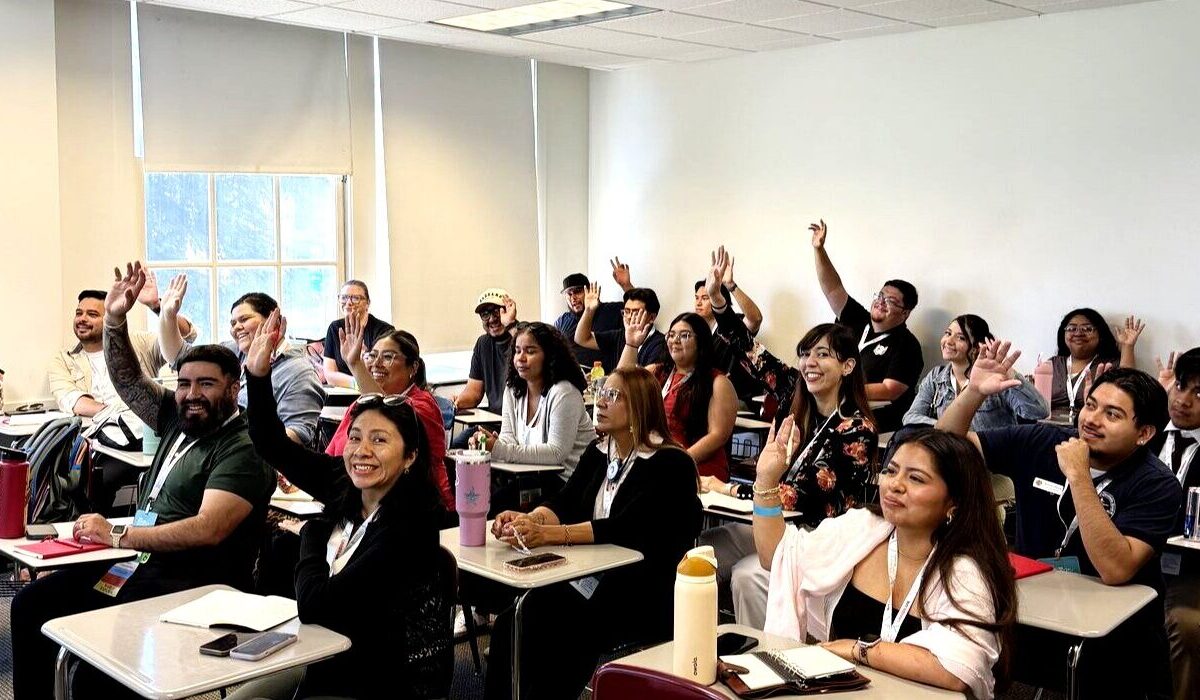
We are excited to launch two new programs for California educators starting this August! The Online Personal Finance Institute and Online Entrepreneurship Institute are designed to provide educators with comprehensive, content-rich professional learning that builds both content knowledge and instructional expertise.
The Online Personal Finance Institute includes the 13 topics required by AB 2927, which will require a semester course for high school students beginning the 2027-2028 school year.
With more than two decades of experience creating and delivering customized professional learning programs, undergraduate and graduate university courses, and curricula in economics, personal finance, and entrepreneurship education, Cheryl A. Ayers, MBA, PhD is the lead professor for the two new institutes we’re offering California educators.
Dr. Ayers has delivered institutes for other states and national organizations and answered a few questions about the programs.
Why should California educators consider enrolling in the upcoming institutes?
It’s easy to make the case for teaching entrepreneurship and personal finance because the current Innovation and Gig Economy requires students to graduate with an entrepreneurial mindset, whether they become entrepreneurs or employees. Financial literacy skills are also workforce readiness skills, and strong personal finance skills are increasingly important in navigating today’s complex financial marketplace.
With regard to the institutes, I don’t think we should expect educators to teach subjects they were not formally prepared to teach. Entrepreneurship and personal finance are two prime examples. Too often, teachers are handed a textbook or turnkey curriculum and expected to learn both the content and the pedagogy while they are already teaching it to students.
Teachers benefit from dedicated time and space to build or refresh their content knowledge and instructional skills beforeentering the classroom. They should also have opportunities to collaborate with peers and adapt resources to meet the unique needs of their students, which serve as ways of processing and applying the material too.
Also important is awarding professional learning or university credit that recognizes teachers’ time, efforts, and commitment to the profession by investing in their own human capital. When we treat teachers as professionals and provide meaningful learning opportunities upfront, everyone benefits, especially the students they serve.
What makes the institutes different from other professional learning programs?
Studies have found that educators who complete substantial, sustained, collaborative training demonstrate greater confidence and instructional effectiveness, and their students achieve stronger financial literacy outcomes. This is why the institutes are structured as a semester-length program as opposed to a series of isolated webinars.
Vetted by 25 years of experience, the professionally curated multimedia collections of 400+ resources feature the greatest hits in both subjects, saving teachers significant amounts of prep time. And while there are a lot of resources on the market, particularly for personal finance education, not all resources are created equally. No one single resource has all the bells and whistles needed to make classroom instruction engaging, accessible, and meaningful.
The institutes were designed to be practical and applied. Participants simultaneously learn content and instructional best practices by reviewing the classroom-ready resources from a variety of gold standard organizations, including news articles, videos, podcasts, infographics, textbooks, lessons, PowerPoint slides, test banks, and more. Educators are given opportunities to tweak the resources in real time for their unique population of students.
As a result, educators are better prepared to teach the new personal finance semester course required for graduation in California, a semester course in entrepreneurship, as well as integrate both subjects across other courses for multidisciplinary, real-world instructional contexts.
How else do the Institutes support student success?
The institutes are aligned with the U.S. Personal Finance Certification Examination and U.S. Entrepreneurship Certification Examination, equipping teachers with the content knowledge, instructional strategies, curriculum, and resources that they need to teach both subjects while preparing students to pass the exams.
Both exams are approved for three hours of Credit for Prior Learning (CPL) at community colleges nationwide and are currently under review by the California Community Colleges Chancellor’s Office.
Why have educators continued to register for the Institutes for more than 15 years?
Part of the reason is the experiential and adult learning theories used to design the Institutes. Regular opportunities to collaborate with peers during live Zoom sessions have consistently been among the highest-rated features on Institute evaluations. Educators especially value the co-created, shareable collection of lessons and resources that participants develop together. This collection will be particularly helpful as teachers prepare to teach California’s newly required personal finance course.
Additional opportunities for collaboration are built into both the online assignments and live Zoom sessions, which feature supportive community partners, guest speakers, grassroots entrepreneurs, and small breakout groups for additional co-planning, networking, and cross-state collaboration.
The institutes also utilize a train-the-trainer model in which participants are encouraged to share lessons and resources with colleagues, creating a multiplier effect that maximizes the Institute return on investment.
How do the Institutes accommodate busy teacher schedules?
One of my main priorities is to support teachers and set them up for success, not add to their stress by holding them to rigid deadlines. I started my career as a high school teacher, so I remember just how busy educators are during the school year. The institutes offer flexible completion options that allow participants to enroll as part of a statewide cohort on a set schedule or complete them independently at their own pace.
Registration is now open for both institutes!
Online Personal Finance Institute
Part A:August 24 – October 16
Part B:October 26 – December 11
Cost: $450 for both parts or $225 for one part
Online Entrepreneurship Institute
Part A:September 14 – November 16
Part B:January 11 – March 15, 2027
Cost: $550 for both parts or $275 for one part
Both Institutes are divided into two parts and may be completed in any order to earn CCEE Certification and professional learning hours or undergraduate/graduate credit. A Certificate of Completion, digital badge, and transcript are included.


California Bill AB 2927 aims to integrate financial literacy education into the High School curriculum, ensuring every student gains essential economic skills for future success. This is critical legislation that will impact how students receive financial education.


Recognized as one of California’s top nonprofits, CCEE proudly received the Non-Profit of the Year Award in 2023 for its dedication to empowering students and educators with essential financial literacy and economic skills. This prestigious honor highlights our commitment to building a stronger, more financially resilient future for all Californians.
To equip California teachers, and especially their students, with the tools and knowledge of personal finance and economics to empower them to make more impactful decisions for themselves, their families and their communities.
CCEE’s Centers for Economic Education are located throughout California at higher education campuses. These centers are critical to helping us achieve our vision of economic and financial literacy for all.


Explore our comprehensive programs designed to equip educators, engage students, and empower communities with the tools for financial success and economic understanding.

Our professional development programs empower teachers with the tools, resources, and training to confidently bring financial literacy into the classroom, impacting countless students across California.

From engaging competitions to interactive workshops, our student programs foster practical economic skills, helping young Californians prepare for real-world financial decisions and build a foundation for success.

Through partnerships and community initiatives, we extend financial literacy education beyond the classroom, making essential economic knowledge accessible to families and communities across the state.
See how CCEE’s programs are transforming lives by equipping California’s youth and educators with essential financial skills.


“Many of us teachers are not economists, as strange as that may sound, but we absolutely want to empower our students. This opportunity has allowed me to increase my own human capital, and now I can show my students how much human capital they already possess and the importance of growing it further.”

Channel Islands High School
Oxnard Union High School District
Oxnard, CA